
How to Fix False Teeth Safely: Why DIY Isn’t Worth the Risk
Health avoid diy dental fixes, denture repair risks, fixing false teeth safely, professional denture careLiving with dentures can restore confidence, improve chewing ability, and support facial structure, but they also require careful handling when damage occurs. Many people are tempted to attempt a quick solution at home when something goes wrong, especially if the issue seems minor. However, a false teeth fix done without proper materials or professional oversight can introduce serious risks that are not immediately obvious.
In reality, dentures are precision-made medical devices designed to fit your mouth exactly. Even a small crack, chip, or loosened component can affect how they function and how comfortable they feel. When something breaks, it is natural to want a fast solution, but speed should never come at the expense of safety or long-term oral health.
Understanding what is at stake helps patients make better decisions. Dental prosthetics interact directly with soft tissues, gums, and bone structure. Any incorrect adjustment, even one that seems harmless, can lead to irritation, infection, or long-term damage that becomes more expensive and difficult to correct.
Why DIY Denture Repairs Can Create Hidden Complications
Attempting a false teeth fix at home often seems like a practical shortcut, especially when discomfort or inconvenience is involved. Many over-the-counter kits and household adhesives are marketed as quick solutions, but they are not designed for medical-grade repair or long-term oral use. These materials can weaken the structural integrity of dentures and may contain substances that are not safe for prolonged contact with oral tissues.
One of the most common misconceptions is that a small crack can simply be glued back together without consequence. In reality, dentures are engineered with specific alignment and pressure distribution in mind. Even a slight misalignment introduced during a home repair can lead to uneven biting pressure, which may cause sore spots, gum inflammation, or accelerated wear of remaining teeth if partial dentures are used.
Another concern is hygiene. Dentures require sterile handling during repair. Household environments are not sterile, and improper handling can introduce bacteria into tiny fractures or porous surfaces. This can lead to irritation or infection in the soft tissues of the mouth, especially in individuals with sensitive gums or underlying health conditions.
Common Reasons Dentures Break or Become Damaged
Understanding why dentures fail helps prevent repeat issues and highlights why professional intervention is often necessary. Dentures are durable, but they are not indestructible, and several factors contribute to damage over time.
Common causes include:
- Accidental dropping during cleaning or handling
- Gradual material fatigue from daily wear and pressure
- Poor fit leading to uneven stress distribution
- Eating hard or sticky foods that exceed material tolerance
In many cases, damage is not immediately visible. A small hairline crack may develop before a full break occurs, and by the time it becomes noticeable, the structural integrity of the prosthetic may already be compromised. This is why early assessment by a dental professional is critical rather than relying on temporary solutions.
It is also important to understand that repeated at-home attempts to perform a false teeth fix can worsen the original problem. Each adjustment may slightly alter alignment, compounding stress on different areas of the denture until failure becomes inevitable.
What Professional Denture Repair Actually Involves
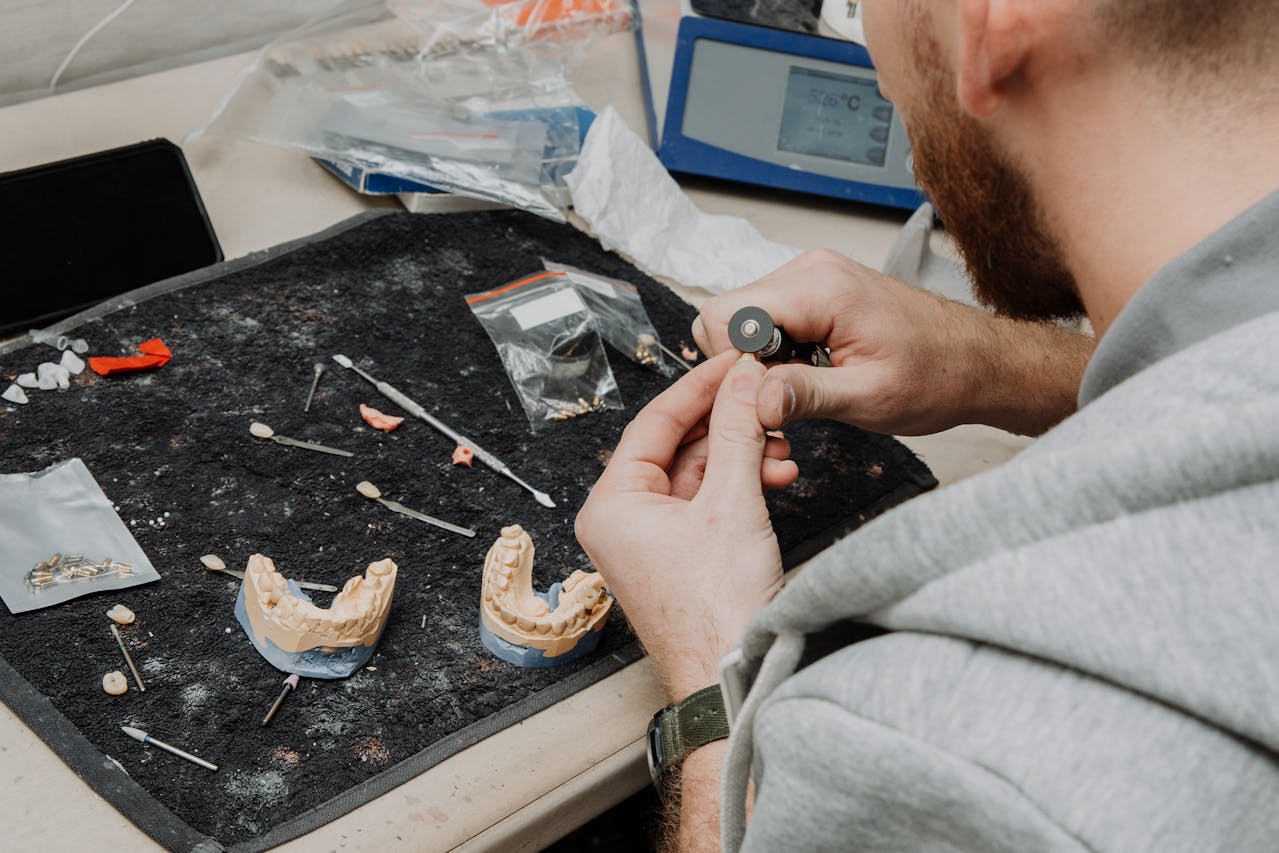
A professional dental technician does far more than simply glue broken pieces together. The repair process is methodical and designed to restore both function and fit while preserving oral health. Depending on the severity of the damage, repairs may involve realigning components, reinforcing structural weak points, or rebuilding sections entirely.
A typical repair process may include:
- Careful assessment of the fracture or damage under magnification
- Cleaning and sterilisation of the denture to remove contaminants
- Precision reconstruction using medical-grade materials
- Final adjustments to ensure proper bite alignment and comfort
Each step is designed to maintain the integrity of the prosthetic while ensuring it continues to function safely inside the mouth. Unlike a temporary household attempt at a false teeth fix, professional repairs are built to withstand long-term use and chewing pressure.
Importantly, technicians also evaluate whether the denture is still structurally viable. In some cases, repeated damage or wear may indicate that a full replacement is more appropriate than another repair.
Health Risks Linked to Improvised Repair Methods
Using non-medical adhesives or attempting adjustments without training can introduce a range of oral health risks. These risks are often underestimated because the effects may not appear immediately.
One of the most significant concerns is chemical exposure. Many adhesives not designed for oral use can release irritants or break down when exposed to saliva and temperature changes. This can lead to inflammation of the gums or irritation of the oral mucosa.
Another risk is bacterial growth. Cracks filled with unsuitable materials can trap moisture and food particles, creating an environment where bacteria thrive. Over time, this may contribute to bad breath, gum irritation, or more serious oral infections.
To highlight the most common dangers associated with improper repairs:
- Increased risk of gum injury from sharp or uneven edges
- Reduced stability of dentures during speaking or eating
- Potential allergic reactions to non-dental materials
- Accelerated deterioration of the prosthetic structure
These issues often develop gradually, which makes them harder to identify early. What begins as a quick attempt at a false teeth fix can evolve into a situation requiring extensive dental intervention.
When Immediate Professional Attention Is Necessary
Not all denture issues are equal, and some situations require urgent evaluation rather than temporary measures. Delaying treatment can worsen the damage and increase the likelihood of discomfort or complications.
Seek professional help promptly if you notice:
- Visible cracks or breaks in the denture base or teeth
- Sharp edges causing irritation or cuts in the mouth
- Sudden changes in fit or stability
- Pain or pressure points during normal use
In these cases, continuing to wear or modify the denture without expert input can exacerbate the problem. Even if the damage seems minor, internal fractures may already be present and worsening under pressure.
A cautious approach is always best. Dental professionals have the tools and expertise to determine whether a repair is possible or if replacement is the safer option.
How to Care for Dentures to Prevent Future Damage
Preventative care plays a major role in reducing the need for repairs. While dentures are designed to withstand daily use, proper maintenance significantly extends their lifespan and reduces the likelihood of unexpected breakage.
Good maintenance habits include regular cleaning with appropriate products, safe storage in water or a recommended solution when not in use, and avoiding excessive force when eating hard foods. Routine dental check-ups are also essential, as they allow early detection of wear or structural weakening.
A common reason patients seek a false teeth fix is neglecting small issues until they become larger problems. Regular inspection at home—looking for fine cracks, loose fittings, or rough edges—can help identify concerns early before they escalate.
It is also important to avoid using hot water when cleaning dentures, as excessive heat can warp materials and affect the fit. Similarly, dropping dentures onto hard surfaces is one of the leading causes of preventable damage, so handling them over soft towels or basins is recommended.
Maintaining a consistent care routine not only improves comfort but also reduces long-term costs associated with repeated repairs or replacements.
Final Considerations on Safe Denture Repair Choices
Dentures are a significant investment in both oral health and quality of life, and treating them with appropriate care is essential. While it may be tempting to seek a quick fix at home, especially when inconvenience strikes unexpectedly, the risks associated with improvised solutions far outweigh the short-term convenience.
A properly handled repair ensures that fit, function, and hygiene are preserved. More importantly, it protects the health of the surrounding oral tissues, which are directly affected by how well dentures are maintained and adjusted.
In most cases, what appears to be a simple issue requiring a fast false teeth fix is actually a technical problem that requires professional evaluation. Choosing expert care not only restores the denture more effectively but also helps prevent recurring damage in the future.